How to Run Tony Bennett's Pack-Line Defense: A Step-by-Step Breakdown for Coaches
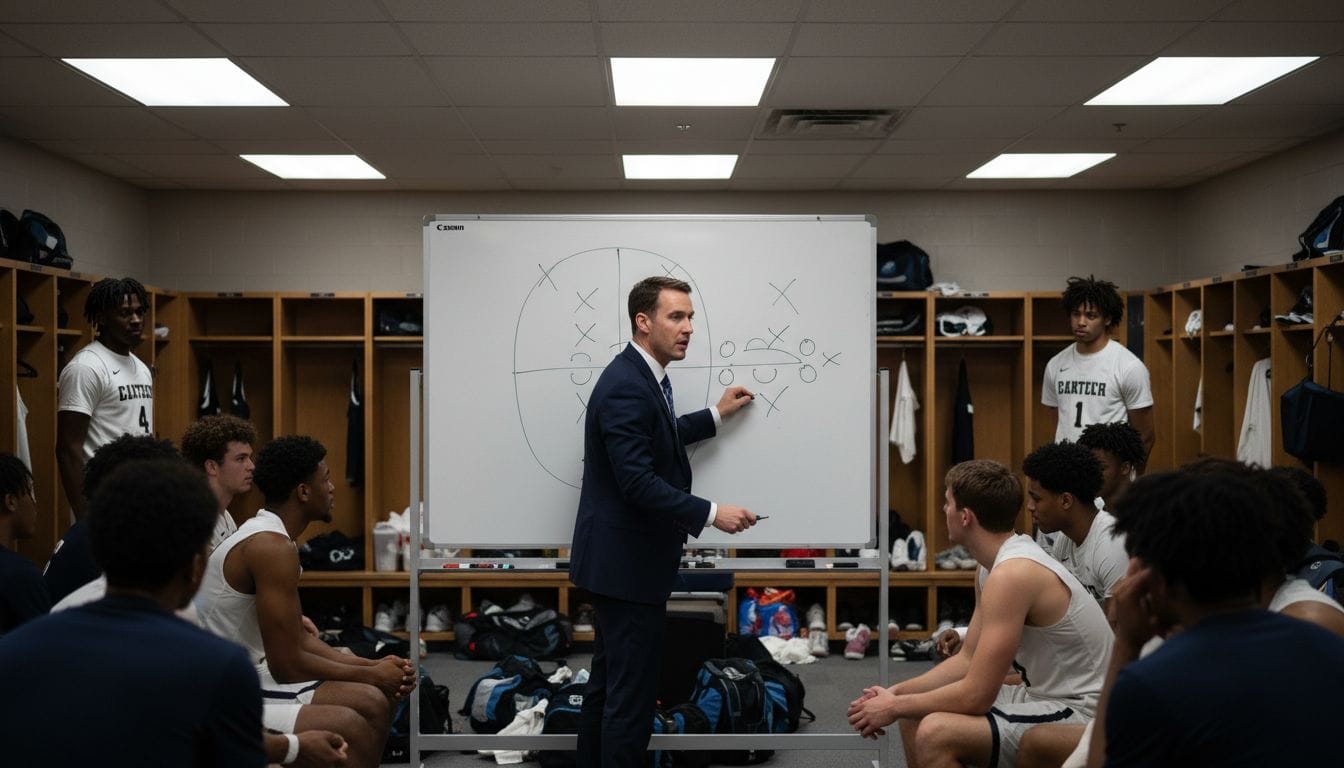
Here's a number that should stop you cold: Virginia's 2019 NCAA Championship team held opponents to under 56 points per game. Not 70. Not 65. 56. That's not luck. That's a system — specifically, Tony Bennett's pack-line defense, one of the most suffocating, paint-protecting defensive schemes in the history of college basketball. And the best part? You don't need Malcolm Brogdon-level talent to run it. You need the right principles, five players who buy in, and a clear understanding of how the whole thing fits together. That's exactly what we're going to break down here.
What Is the Pack-Line Defense, Exactly?
Let's get this straight before anything else. The pack-line is a man-to-man defense — not a zone. People confuse this constantly. It looks like a zone because of how compact it is, but every defender has a man assignment. The difference is how they guard that man.
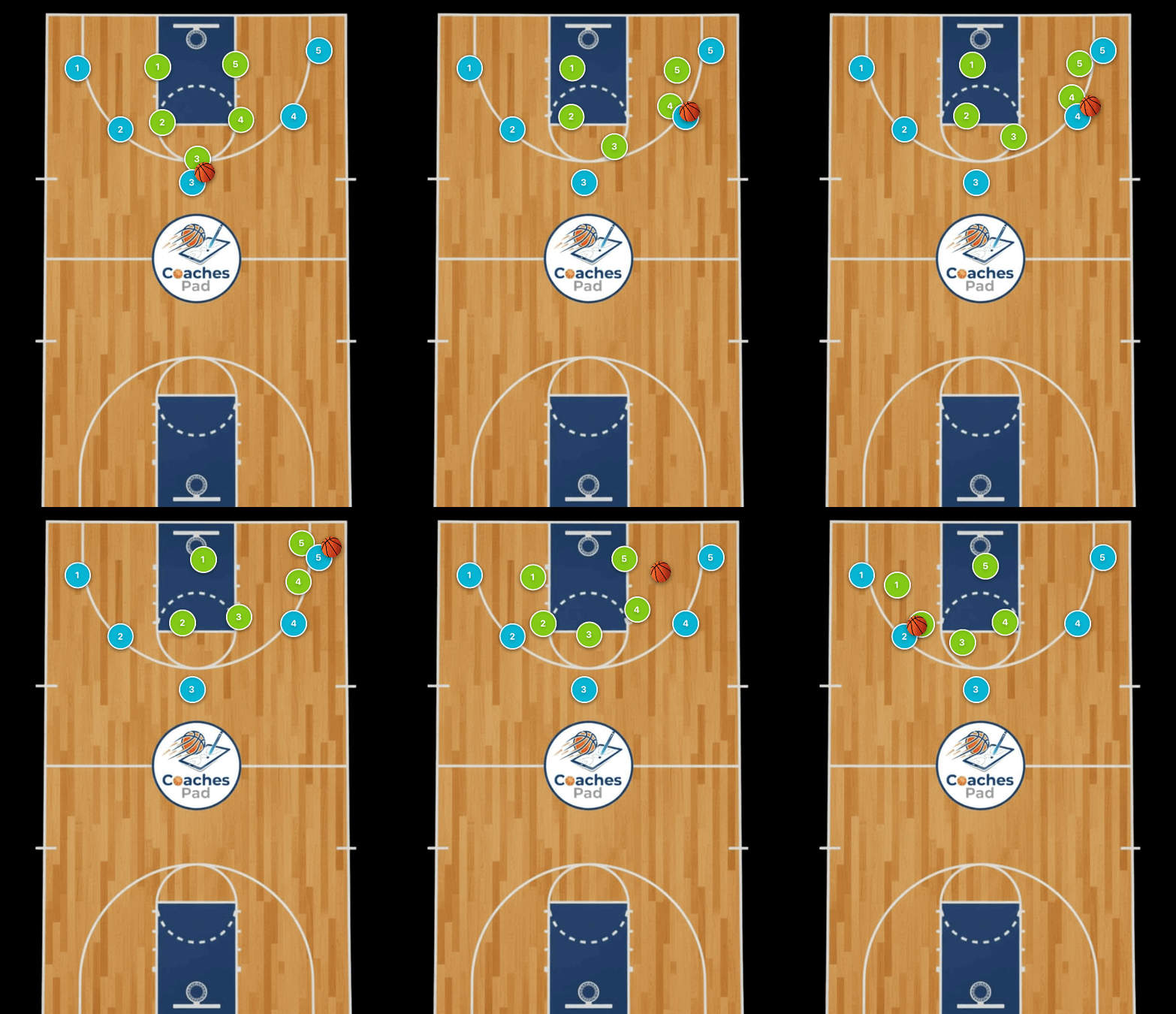
Here's the core concept. There's an imaginary line roughly one foot inside the three-point arc. That's the pack-line. Every off-ball defender — meaning everyone except the guy guarding the ball — is supposed to live on that line or just inside it. Not at the three-point line. Not in the lane. Right on that pack-line.
Why does that positioning matter so much? Because it does two things simultaneously. It clogs the paint so that dribble penetration hits a wall of bodies. And it still keeps defenders close enough to contest a kick-out three-pointer if the offense swings it. You're not giving up easy layups. You're not giving up open corner threes either. You're forcing teams to make hard, contested mid-range decisions — the worst shot in basketball.
Think of it like a net that tightens the moment the ball moves toward the basket. The offense doesn't get a clean path anywhere. That's the whole idea.
The Two Non-Negotiables: Ball Pressure and Pack Positioning
Every single thing in this system hinges on two responsibilities happening at the same time, every single possession. No exceptions.
1. The on-ball defender applies relentless pressure. This isn't optional. The player guarding the ball is the one person who does not sit on the pack-line. They're up in the ball-handler's jersey. Active hands. Forcing difficult decisions. Virginia's teams were famous for this — they didn't just guard the ball, they attacked it. Malcolm Brogdon could guard one through four, and that versatility let Bennett put his best pressure defender wherever the ball went. Your job as a coach is to identify your best on-ball defender and build trust that they can hold their own while the rest of the team packs in.
2. Every off-ball defender stays packed in, in position, on the line. This is the part that takes real discipline. When the ball moves, everyone moves — on airtime, not after the catch. If your players are reacting after the ball arrives, you're already late. Bennett's Virginia teams were notorious for how synchronized their movement was. Five players functioning as one defensive unit. Ball swings left, everyone shifts left simultaneously. It looks almost choreographed. And honestly, that's the goal.
A lot of coaches run into trouble here because they focus so much on the on-ball pressure piece that they neglect to drill the off-ball positioning. Don't make that mistake. The pack-line only works if the pack is actually there when a driver turns the corner.
Stopping Dribble Penetration: Help Is Never an Afterthought
Here's where the system really earns its reputation. The pack-line defense is specifically engineered to stop dribble penetration — arguably the most dangerous offensive weapon at every level of basketball. And it stops it not by hoping the on-ball defender stays in front, but by making the help defense automatic.
When your on-ball defender gets beat off the dribble — and sometimes they will, even the best ones — the driver should immediately run into a packed lane of two or three defenders who are already in help position. There's no scrambling. There's no rotating from the perimeter and hoping to get there in time. The help is already there because everyone is already on the pack-line.
This is genuinely one of the most elegant things about the system. The positioning that protects the paint also serves as the help defense. You don't need a separate help rotation concept layered on top. It's baked in. If you're managing a team's defensive assignments and rotations, keeping all of this organized during games is where tools like detailed game tracking and stat management can make a real difference — you'll see exactly where your help defense is breaking down and why.
Now here's the thing about forcing the action toward the middle. In most defenses, coaches tell players to force ball-handlers toward the baseline — toward the sideline, where the boundary acts as an extra defender. The pack-line actually flips this. You're inviting drives toward the middle. Why? Because that's exactly where all your packed defenders are waiting. You're setting a trap and the offense doesn't even realize it. A drive toward the baseline beats one defender and leads to an open look. A drive toward the middle leads directly into a crowd.
This takes some mental adjustment for players who've been coached to push everything baseline their whole careers. Expect some confusion early in practice. That's completely normal. Work through it with walkthroughs before you ever get into live drills.
How Virginia Used This to Build a Defensive Identity
Let's zoom out for a second and talk about what this defense does to an opponent's offense over the course of a full game.
Points just don't come easy against a well-run pack-line. That's the whole point. Virginia wasn't trying to create turnovers and run in transition — they were trying to slow everything down and make every single possession a grind. Opponents had to work for every shot. And when every shot is contested, even good shooters start missing. Fatigue sets in mentally. Offensive players who are used to getting their spots get frustrated. Bad shots start coming earlier in the shot clock.
Virginia's defensive identity wasn't just about the scheme — it was about the culture Bennett built around it. His players genuinely embraced defending as the primary way to win. That buy-in is something you can't draw up on a whiteboard. You have to build it. And part of building it is giving your players a system they believe in, one where they can see exactly how it's supposed to work and why their specific role in it matters.
Anthony Gil, Brogdon, Justin Anderson — these weren't just talented defenders. They were believers in the system. When your whole unit trusts the scheme, they move with a confidence and a synchronization that's genuinely hard to score against. If you're thinking about how to communicate that system to your team and track whether it's actually working during live play, building a foundation with smart league and game management tools gives you real data to back up what your eyes are telling you on the court.
One more thing worth saying here. The pack-line isn't a passive defense. It looks passive to casual observers because there's no gambling, no trapping full-court, no wild denials. But it's incredibly active. Players are reading the ball constantly, moving on every pass, contesting every shot. The discipline required is intense. Don't underestimate the conditioning and mental focus this system demands from your roster.
Controlling the Low Post: The Foundation of Pack-Line Defense
Here's something most recreational league coaches never think about until it's too late — the low post isn't just a position on the floor. It's a war zone. And if you let the opponent set up shop in that painted area, you've already lost the battle before the play even develops.
So what exactly is the post box? Think of it as the danger zone along the dotted line area closest to the basket. Your job is simple: keep every opposing player out of it. Not most of the time. Every single time.
Here's how to execute this in practice:
- Use an arm bar aggressively. Don't be passive. Physically push your opponent out of that prime real estate before they can catch and score.
- Apply a 3/4 High Denial when the ball is above the three-point line. You're cutting off the passing lane at an angle — not fully fronting, but definitely not giving a clean look either.
- Switch to Full Denial when the ball drops below the three-point line. Now you're completely sealing the passing lane. The low post player should not touch the ball here. Period.
- Go into Full Denial mode when the ball is at the top of the key. Why? Because there's a direct passing line to the post. That's the most dangerous entry pass in basketball. Don't gift wrap it.
And what happens when you let someone catch deep in the post box near the middle of the basket? Watch the film sometime. It's ugly. Easy layups. Easy and-ones. Plays that demoralize your entire team. The whole point of this defensive system is to make those moments nearly impossible.
When — not if, when — the ball does get into the low post, your response needs to be immediate. Choke the post. Double team. Force that player to kick it back out to the perimeter. Yes, a perimeter shot is exactly what you want to allow. That's the trade-off the defense is built on.
Help Defense Positioning: Why the Pack-Line Only Works as a System
This is where a lot of teams fall apart. They understand the concept but they execute it individually. And individual effort in a team defensive system is a recipe for disaster.
The pack-line defense only works when every player not guarding the ball is already in the pack-line area. Not close to it. In it. Halfway between their own man and the ball handler, in a proper help position. This is non-negotiable.
Think about what that accomplishes. If your on-ball defender gets beaten off the dribble — and it will happen, even to good defenders — help is already there. Not scrambling over. Not rotating late. Already there. That's the beauty of this system when it's executed correctly, and it's also why understanding defensive rotations at a fundamental level makes such a massive difference in how your team performs under pressure.
Here's the rotation breakdown when the ball moves:
- Ball handler kicks it out to the perimeter? Close out fast. Yes, you're going to give up that shot sometimes. Accept it. But you still close out hard and contest — don't just stand there watching.
- Driving lane opens up? The packed interior means there are bodies already in the way. The ball handler isn't finding a clear path to the rim.
- Help defender's man cuts toward the ball? You adjust, but you never fully abandon your help position until the ball moves.
Here's an honest take: most amateur and recreational league teams struggle with this because staying disciplined off the ball is boring. Standing in the right spot, not chasing your man around, trusting the system — it doesn't feel heroic. But it's what wins games. Tracking defensive performance stats throughout a season is one of the best ways to prove to your players that the boring stuff actually shows up in the final score.
Baseline Denial vs. Forcing Middle: Flipping the Script
Here's where pack-line defense gets genuinely interesting — and where it separates itself from almost every other defensive scheme you've probably run before.
In most denial defenses, you force baseline. Push the ball handler toward the sideline, away from the middle of the floor. Makes sense, right? Limit their options. But pack-line flips that completely.
You want to deny the baseline and force middle. Two big reasons:
- Reason one: your help is already packed in the middle. You've got bodies there. When the ball handler drives middle, they're not finding open space — they're running into a wall of defenders who are already positioned correctly.
- Reason two: the middle is where your defense is strongest. Driving baseline opens up dangerous angles and cuts off your help defenders. Driving middle plays right into the pack-line structure you've already built.
This is counterintuitive at first. Coaches who have been teaching baseline force for years will push back on it. But once you see it work in a real game — once you watch a ball handler drive middle and get completely swallowed up by three defenders who were already in position — it clicks instantly.
Force middle. Trust the pack. Make them take the perimeter shot. That's the whole philosophy in three sentences.
Closing Out, Ball Flight, and the Details That Win Games
Here's a truth most coaches skip over: the small details aren't small. They're everything.
One of the biggest weaknesses of the Pack-Line Defense is what happens when you get beat off the dribble. You've got two players collapsing on the ball handler — and then he kicks it out. That split second. That tiny window. That's where games are won or lost. An open shooter gets a clean look, and suddenly your whole defensive scheme falls apart at the seams.
So what do you do? You practice your closeouts. Relentlessly.
- Keep your hands high — contest without fouling
- Use short, choppy steps — stay balanced and in control as you close
- Make the shot difficult — you don't always need to block it, just disrupt the rhythm
And here's the detail that separates good defenders from great ones: when the ball is passed to your man, you cannot wait for it to arrive before you move. You move on the flight of the ball. The moment it leaves the passer's hands, you're already transitioning. If you're waiting until the catch — you're already late. It sounds simple. It's actually a habit that takes weeks to build properly.
Feeding the low post is also worth understanding here. Going baseline makes it significantly easier to enter the ball into the post. Go top? It's a much harder pass to complete. Smart offensive teams will exploit this, so your defenders need to be aware of positioning relative to the basket at all times — especially when new defensive concepts are still being built into your system.
Transition Defense, Screening Rules, and Dick Bennett's Golden Rule
Transition defense in the Pack-Line is refreshingly simple. Don't overcomplicate it.
The rule? Just get back. That's it. You're not applying pressure to the ball handler in transition. You're not gambling for steals. You're retreating into the Pack-Line area, getting your structure set, and making the offense work against an organized defense. Teams that try to press or trap in transition against good ball movement get burned. Get back first. Everything else follows.
Now — the physical contact rule. This one is gold, and it comes straight from Dick Bennett, the father of Tony Bennett and the original architect of this defensive philosophy. His quote is worth memorizing:
"If you touch your guy at all times, you won't get screened."
For every cutter moving through the paint, you want to physically attach yourself to them inside the Pack-Line area. Stay connected. The moment they exit the Pack-Line area, you can release that contact. But inside it? You're attached. This is what makes the defense so suffocating — cutters can't get clean separation, and the whole offense starts to feel congested and uncomfortable.
On screens, Virginia's approach is to hard hedge and switch on every single one. Decisive. No hesitation. But — and this is an important but — that only works when your defensive players are at roughly the same level. If you've got massive discrepancies in speed, size, or skill across your roster, rigid switching creates mismatches you can't hide. In that case, consider a more flexible approach and let players stay attached to their own assignments. Know your personnel. Always.
Final Thoughts
The Pack-Line Defense isn't flashy. It's not built on gambles or highlight-reel blocks. It's built on discipline, positioning, and a relentless commitment to the details — ball flight movement, closeout footwork, physical contact on cutters, smart hedging on screens. That's what makes it so hard to play against at the highest level, and honestly, it's what makes it so satisfying to coach when it clicks. Start with the fundamentals. Drill the small stuff until it's automatic. And trust the system — because the system, when executed well, genuinely works.